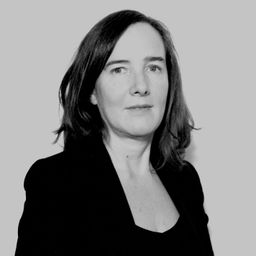
Celia Vara
Celia Vara holds a Ph.D. in Communication (2019) at Concordia University (QC, Canada) and has been a postdoctoral fellow at the Moving Image Research Lab at McGill University (2024). She is a psychologist since 1997, and her master thesis (“Feminist Video Art in the 70’s in Spain”) won in 2013 the 1st Prize-Award in Gender and Research by Jaume I University in Spain. She is also a visual artist and curator. Her writings and media work have appeared in Journal feral feminisms, Institute for Research on Women (Rutgers University), McGraw Hill Editorial, Art and Politics, humanities and entropy (MPDI Switzerland), Journal of Embodied Research (University of Huddersfield, UK) and Asparkia Investigació feminista. Her PhD Thesis “Kinesthetic Knowledge and Corporal Agency” was ranked excellent in her oral defense (2019). Her pedagogical approach has been recognized with the 2024 Teaching Excellence Award at McGill University. She explores kinesthesia, movement, kinesthetic empathy and the use of sensorial body in 1970s feminist performance art and its relations with corporeal agency and feminist resistance in the current cultural and political context. Her research interests include corporeal processes of consciousness, perception, corporeal agency, feminist pedagogies and embodied research-creation methodologies.
Sessions in which Celia Vara attends
Wednesday 7 May, 2025
In "Learning(with)plants" interactive workshop we will invite one guest plant to participate in our practice-based research space of sensing and healing with plants. We will reflect on vegetal intelligence and will question what plants can teach us and how they can participate in our mutual learning to respond to the challenges of the fast-changing world. We will be sharing stories, memories, experiences, feelings, diverse knowledges and we will be writing(with)plants by shapeshifting into a ...
2026 will mark the 20th anniversary of the launch of The Senses and Society and coining of the term ‘sensory studies.’ Senses and Society was founded by Michael Bull and David Howes (who have alternated in the role of Managing Editor every 3-4 years) and Doug Kahn and Paul Gilroy. The term sensory studies was selected (over e.g. ‘sensography’) and used in the title of the inaugural article, ‘Introducing Sensory Studies,’ in order to serve as an umbrella term for the multiple sub...
The sound, video, performative site-specific intervention Nous sommes au cinéma will be presented in Cinéma moderne’s projection room. In order to highlight the very sensorial sense of presence in this piece, the site-specific experience is necessary. The relationships between seeing, listening and touching are tightened by a confusing sense of what is real or not. In order to address the huge challenges that are linked to the environmental collapse, I strongly believe that it is not only o...
Thursday 8 May, 2025
Organizer: Ayaka Yoshimizu ∆ (Department of Asian Studies, University of British Columbia, Canada)Reorienting ourselves to various multisensorial experiences, this panel brings together concepts, applications, and unintended consequences of sensory education from three different fields of intercultural learning: communication studies, language studies, and an international exchange program. To explore the ways of attuning to what is otherwise insensible or unintelligible, Sekimoto w...
Organizer: Akihisa Iwaki ∆ (Kindai University, Japan)Scented Acrylic Colors (https://camp-fire.jp/projects/777431/view) is a scented acrylic paint released at the end of 2024.This innovative product is a collaboration between @aroma’s "100% pure natural essential oils" and Holbein’s high-quality acrylic paints, Acrylic Color (Heavy Body). The project began with a meeting between Masaki Taniguchi (affectionately known as Maa-chan), a visually impaired painter, and scenting design...
Scott McMaster (Art, Design, and Media, Sunway University, Malaysia)Sensory Field Research in Art & DesignThis presentation explores how sensory field research enhances design thinking and perception of urban spaces, drawing from fieldwork conducted in Hong Kong's Mong Kok and Busan’s Seomyeon. Initially conceived as a pedagogical tool in a visual arts research methods course, a sensory scavenger hunt in Mong Kok prompted graduate students to engage with their environ...
Anna Harris ∆ (Department of Society Studies, Maastricht University, The Netherlands)The Sensory Potential of Hospital MatterIn this talk I will explore the sensory potential of materials in the context of the hospital. Hospitals are currently seen as sites of clinical waste, using excessive single-use plastics and disposables, generating mountains of rubbish. Inside hospitals however, people work with materials in many different ways. They might find new uses of objects ...
Organizer: Leena Samin Naqvi with Danielle Wilde (Umeå University, Umeå Institute of Design)In this workshop, participants will be tasked with: painting yoghurt on food safe butter paper; pegging it to a line, to dry; addressing an envelope to someone with whom they wish (or imagine) co- creating culture; adding a note, poem or desire, and yoghurt-making instructions that poetically detail the microbial and environmental meeting and making, noting what elements can (seemingly) be con...
Friday 9 May, 2025
Kelly Keenan ∆ (Département de danse, UQAM, Canada)Fluid Confluence(s): Plural Ways of Knowing in DanceThis article recognises that the dance class, and the fields of practice that we relate to in dance, pull along values, ways of knowing, normalised beliefs and cultural histories. Practice is never isolated: it is always relational and distinct. Using the 2024 Montreal Movement Educators Forum: Fluid Confluence(s) as a case study, this article explores how to unsettle d...
Rosalin Benedict ∆ (Sociology and Anthropology, Concordia University, Canada)Interembodied Attentiveness: Vibrational Encounters between Clinical Herbalists and Medicinal PlantsI intend to present a chapter on my ongoing thesis that explores how clinical herbalists cultivate, experience and express their felt, synergetic relationships with medicinal plants; and how the interconnectedness of humans and plants contributes to a more ecological and embodied approach to wellbe...
ONLINE ONLYOrganizer: Jieling Xiao ∆ (School of Architecture and Design, Birmingham City University, UK)Design whose research explores place-based learning and design through sounds and smells. Her doctoral research explored smellscape pleasantness in transit spaces from a cross-cultural perspective. She is the lead editor for the Frontiers research topic 'Smell, wellbeing and the built environment'. She is currently working on two projects: Multi-modal Hong Kong project documen...
Sundar Sarukkai∆ (Public Intellectual, Founder of Barefoot Philosophers, India)The mystery of the senses is as much in the 'objects' of sensation as in their mechanism. A theory of the senses influences a theory of objects. The sense organs do not perceive the objects per se but only qualities. If this is the case, how can we understand the long held suspicion towards collective and social ontology? In this talk, I will explore some ideas on the ontology of the social and relate it to ...
Saturday 10 May, 2025
Martha Radice ∆ and Francisco Cruces ∆ (Sociology & Social Anthropology, Dalhousie University, Canada; Social and Cultural Anthropology, UNED)Kitchens on fire: Sensory figurations between the routine and the ritualKitchens are sites of creative imagination and powerful materiality. Cooking is never just about food: it entails a complex cycle of planning, shopping, storage, preparation, eating and cleaning. Moreover, kitchens are not only for cooking, but for doing tasks ...
Room MB-7.270Organizer: Carina Rose ∆ (carina rose design, Montreal, Canada) This workshop/ installation will be structured as a complement to my presentation “Skin, Somas and Scores: Experiential movement practices for the architectural process. The intention is to offer participants a somatic movement experience that encompasses some of the content from the presentation. Depending on the possible time and interest, the duration can be 1.5- 3 hours....
Hayleigh Giesbrecht (Faculty of Information, University of Toronto)Palpable Pasts: Affect, Materiality, and ASMR in GLAMASMR, or Autonomous Sensory Meridian Response, is a “sensory phenomenon in which individuals experience a tingling, static-like sensation across the scalp, back of the neck and at times further areas in response to specific triggering audio and visual stimuli” (Barratt & Davis, 2015, p. 1). First identified in 2010, ASMR has since evolved into a popu...